CBS News has reported on a significant development in the South African women's murders investigation: police are examining a possible love triangle as the motive behind the killing of Jabulile Ntimba, the ninth victim found in Ekurhuleni east of Johannesburg. The report, drawing on a police press conference led by Deputy National Police Commissioner Tebello Mosikili, adds an unexpected dimension to a case that had publicly been framed as potentially the work of a serial predator.
The love triangle theory does not apply to all nine deaths. Police have been careful to note that the motive for Ntimba's specific killing appears to be relationship-related, while the broader investigation into the other eight deaths continues on separate tracks. The distinction matters: it suggests that the cluster of killings in Ekurhuleni may represent a confluence of different violent incidents in a small geographic area rather than a single perpetrator working systematically.
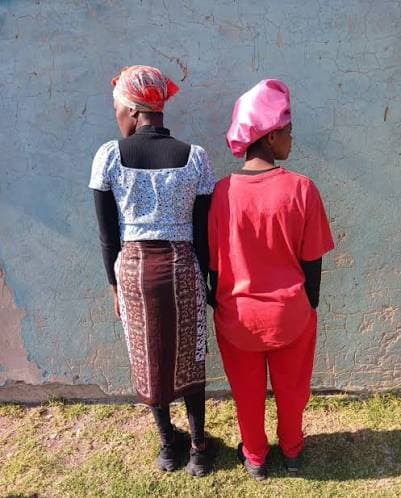
Three people were arrested in connection with Ntimba's death — two women, who appeared in Boksburg Magistrate's Court, and a man, who was subsequently released. The two women were remanded until October 1. Neither the police nor court filings have detailed the specific relationship between the suspects and the victim, though the love triangle framing implies an intimate or social connection that investigators are now mapping.
The CBS report also noted the discovery of a tenth body — a woman found in Soweto wrapped in a duvet near a dam — while making clear that police have not linked this case to the Ekurhuleni series. For South African audiences, the distinction between a connected and an unconnected death in the same news cycle has become difficult to parse. The volume of incidents, each generating its own investigation and its own unanswered questions, has created a state of sustained public alarm.
Acting Minister Cachalia's quoted statement — that investigators would not rush to make arrests at the expense of doing justice properly — was received with mixed reactions. Advocacy groups acknowledged the principle while questioning whether the same standard of investigative rigour is consistently applied when the victims are Black women from working-class communities.
The CBS coverage brings international attention to the case at a moment when South African civil society is demanding more than procedural assurances. The question driving the national conversation is not only who killed these women, but what kind of society produces such conditions — and what it is willing to do to change them.