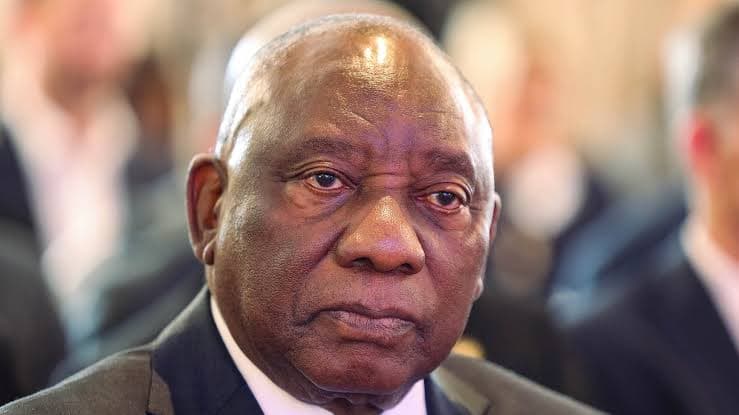
When President Cyril Ramaphosa publicly ordered that the Ekurhuleni killings receive 'the highest level of attention from government and law enforcement agencies,' it was a signal that the political pressure had become impossible to ignore. The deaths of nine women in two months — all in a single municipality east of Johannesburg — had sparked nationwide protests and a media storm that threatened to define the government's record on gender-based violence ahead of what promises to be a testing political period.
Minister of Women Sindisiwe Chikunga moved quickly to announce concrete measures: a specialised multidisciplinary investigation team, coordinated at the level of the Deputy National Commissioner of Detective Services, would take charge of the probe. It was a deliberate escalation, designed to show that ordinary detective resources were being supplemented by senior national command.
But the political response has not been without controversy. Chikunga's public appeal to men — urging South African men to 'stop murdering women' — drew significant pushback online, with critics arguing it was reductive and placed the burden of behaviour change on a speech rather than structural policy. The exchange illustrated the difficult terrain governments navigate when gender-based violence becomes a public crisis: every statement is scrutinised, and the gap between rhetoric and resource allocation is immediately visible to an activated civil society.
South Africa's national emergency on gender-based violence has been in effect since 2019. The government's National Strategic Plan on Gender-Based Violence and Femicide committed to sustained investment in prevention, prosecution, and support services. Advocates acknowledge that some progress has been made — more shelters, faster court processes in some provinces, better police training — but insist that neither the scale of the problem nor the pace of the institutional response has fundamentally changed.
Police Minister Firoz Cachalia's statement that investigations had not yet confirmed a serial killer in the Ekurhuleni cases was carefully worded. It preserved investigative flexibility while avoiding the panic that a serial killer designation can cause. But for many South African women, the distinction matters little: whether one killer or many, nine women are dead and the streets feel unsafe.
The arrests of two female suspects in connection with one of the deaths added an unexpected dimension to the public narrative. Most public discourse had assumed a male perpetrator, and the development was met with surprise and considerable discussion about how gender dynamics in violent crime are understood and communicated.
What happens next will be watched closely. Investigations of this scale can stall, political attention can move on, and specialised teams can be disbanded when the immediate pressure subsides. Women's organisations have made clear they will hold the government to account — not just for solving these specific cases, but for the sustained institutional change that has been promised and not delivered.